



For the September issue of MoneyMarketing SA, Sandy Welch interviewed Justin Cousins about Peregrine Capital’s outlook for the remainder of the year. Justin shared his views on the current mood among businesses and clients in South Africa, how the upcoming US election might impact South Africa and the global economy, and how our investment strategies can be adapted to economic trends.
- article
- 3 min read
- 30 September 2024
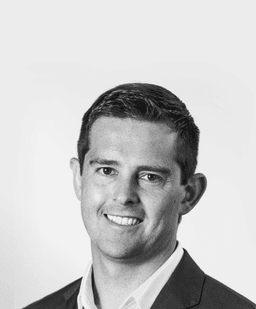
Peregrine Capital’s fund results for the first half of the year were positive, with net returns of 8% and 6% for High Growth and Pure Hedge qualified funds, respectively. MoneyMarketing spoke to Justin Cousins to find out more about the company’s outlook for the year going forward.
What has this very unpredictable year been like for you? It’s been a difficult one for us. We are very bottom-up focused, so we worry about company fundamentals and how the businesses are performing on the ground. This year, we had a watershed election in South Africa, the likes of which we haven’t seen in 30 years. The actual election outcome was mind-blowing, with the MK taking more share away from the ANC than we anticipated.
How did you manage your portfolio during this period? We had to balance our optimism on South African valuations with the top-down election risk factor, which was difficult to quantify. While we were buying South African bonds and equities, we also bought protection in the form of currency derivatives to hedge against potential negative outcomes. We didn’t have any greater insights than anyone else about the potential partnership arrangements with the ANC. Our fear was an outcome with the EFF, but President Ramaphosa’s decision to partner with the DA, IFP, and other reform-minded parties was unbelievable. This gave us confidence to continue investing in South Africa.
What has been the impact on foreign and local investments? Year to date, there has been R80bn worth of foreign outflows in the equity space, which hasn’t come back post-elections. However, there has been foreign interest in our bonds, leading to a tightening of the yield from just north of 12% on the 10-year to just below 11%. Local balance funds have also been selling South African domestic equities and taking their exposure offshore, contributing to the derating of South African equity prices over the last 12 months.
Do you foresee companies that pulled money out returning? We are hopeful. While there hasn’t been much interest in the domestic equity space yet, there is a sense of post-traumatic stress disorder among investors, due to years of stagnation. Many asset managers want to see evidence of improvement on the ground before changing their asset allocation in favour of South African equities. However, the valuations are still very supportive from our perspective.
What are your thoughts on the future? We are tilting towards a more favourable view. There are many small and big wins that can be achieved with little effort. For example, Eskom has shown strong improvements in plant performance and maintenance. We need to see similar improvements in rail, policing and water. There is unprecedented collaboration between the government and the private sector, which is positive. The continuation of reforms and the reduction of loadshedding should boost GDP. Additionally, a stronger currency and tighter bond yields could put downward pressure on inflation, potentially leading to interest rate cuts. This would provide more cash to consumers and lower funding costs for businesses, generating higher economic growth and job creation. We are leaning more towards optimism at this point.
What is the current mood among businesses and clients in South Africa? There is a growing sense of optimism among businesses and clients. Interactions with major retailers and property companies indicate a cautious but positive outlook. Despite concerns about issues like loadshedding, there is a belief that the worst may be behind us. However, it will take time for confidence to fully rebuild, given the history of broken promises by the government.
What are the short-term and long-term economic prospects for South Africa? In the short term, factors like interest rate reductions due to moderating inflation are expected to stimulate the economy. Structural reforms in sectors such as rail, ports and water are also in progress, which should further boost confidence. In the medium term, these reforms are anticipated to drive significant economic growth. While immediate excitement is tempered, there is a sense that momentum is building.
How might the upcoming US election impact South Africa and the global economy? The US election is challenging to predict, but a Trump presidency could bring probusiness policies, a more inwardly focused USA and domestic tax cuts, potentially stimulating US growth. A Harris presidency could introduce greater regulation and higher taxation rates in the US, but foreign policy toward countries like South Africa would not change meaningfully. The South African government has encouragingly chosen to adopt a a more conciliatory approach towards the US of late, recognising its importance as a trading partner. We are hopeful that relations will improve and trade will flourish, regardless of who occupies The White House. These high level political relationships are difficult to evaluate.
What is the outlook for South African companies in the global market? We think South African companies should focus on what they do best, which is growing their per share earnings through disciplined capital allocation where investment decisions are focused on the local economy. Many South African companies have fared poorly when venturing offshore as the competitive advantage that they enjoy at home is not transferrable to other jurisdictions. The positive election outcome will drive inflation and funding costs lower, reduce input prices for many goods and, should stimulate the broader consumer environment. Conversely, export-focused businesses like mines and farms will find life more challenging given the impact of the strong Rand on their revenue bases.
How are Peregrine Capital’s investment strategies adapting to global economic trends? Our investment strategies are flexible, allowing for investments both domestically and internationally. For instance, investments in companies like Tencent have proven beneficial. Despite potential unfavourable outcomes in the US, opportunities in other markets, such as China and Europe, remain promising. The rise of technologies like artificial intelligence (AI) is also attracting significant capital, presenting new investment opportunities.
What is the perspective on the valuations of major tech companies? Companies such as Meta, Google, Amazon and Microsoft are supported by real earnings, strong cash generation, powerful balance sheets and better than average growth rates. Unlike the tech bubble of 2000, the current performance is driven by earnings growth rather than excessive valuations, so the price appreciation we have witnessed for the shares of these companies may prove to be justified. The size and scale of these companies does attract far more scrutiny than in the past. We have seen a raft of terrible regulations drafted in Europe to curb the growth of these businesses and depending on the outcome of the US elections, similar regulatory overreach might develop there. Over in China, valuations of their tech giants remain at rock-bottom levels, despite a significant improvement in earnings growth and capital allocation in recent years. These companies continue to suffer from the weak economy and concern about regulatory incursions as we saw in 2021.
What is the overall sentiment towards the future economic landscape? We are cautiously optimistic, especially in South Africa. While there are challenges and uncertainties, there is also a belief in the potential for growth and positive change. The focus is on building confidence, leveraging short-term wins, and pursuing structural reforms to drive long-term economic growth. The journey may be unpredictable, but there is a sense of resilience and hope for the future. We remain on the lookout for attractively priced opportunities in South Africa, and abroad.
In the News
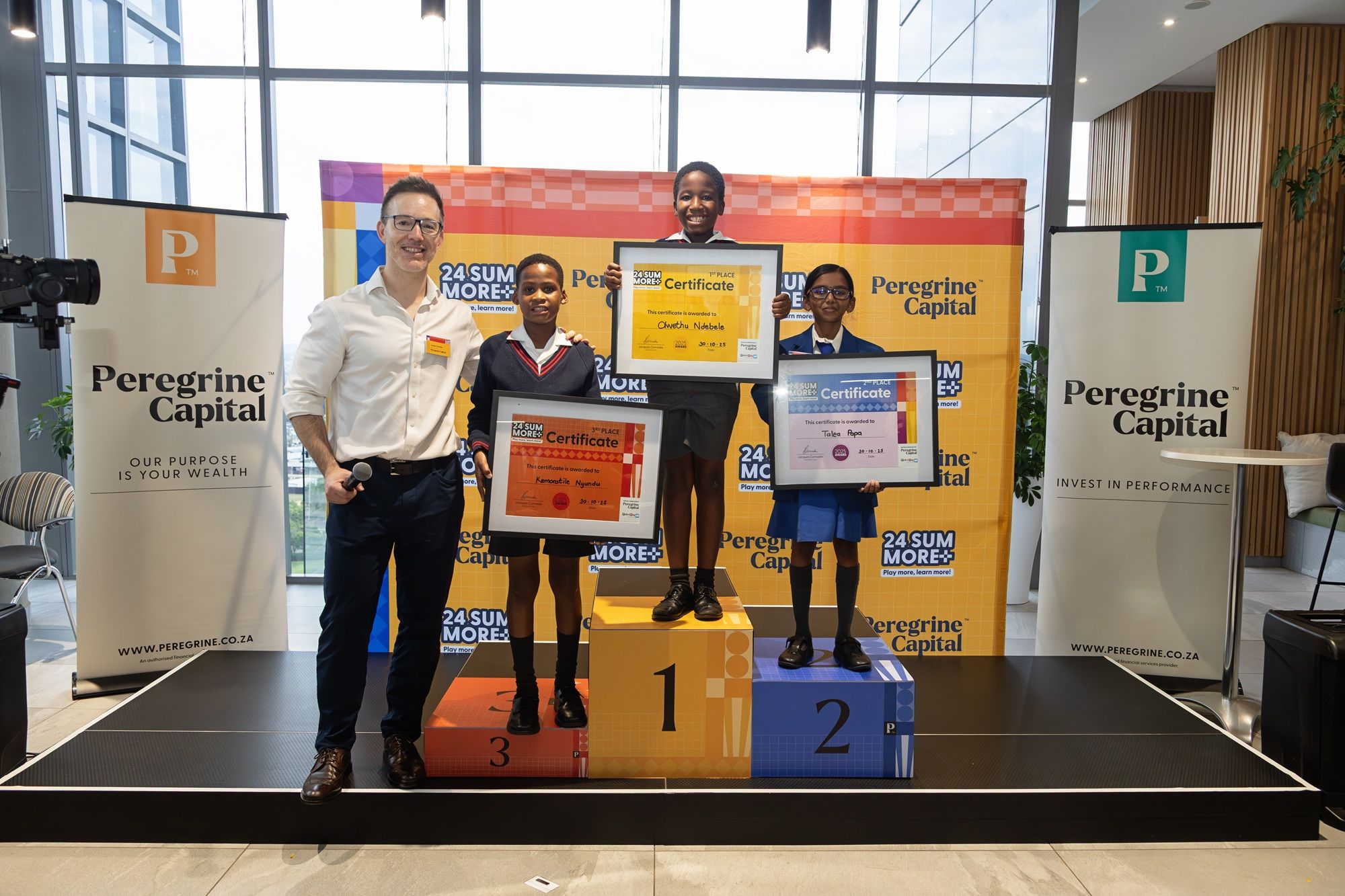
South Africa’s Young Maths Champions Prepare to Make 24 as Peregrine Capital 24SumMore National Final Looms
Can you make 24? Grade 4 – 6 maths champions from 300+ schools compete in the Peregrine Capital 24SumMore national final in Johannesburg on 29 October 2026.
- article
- 3 min read
- 29 September 2026

In the News
The Many Hats a Financial Advisor Wears
Ask most people what a financial advisor does and you get some version of the same answer: they pick investments. That is the visible part of the job, in the way that a prescription is the visible part of what a doctor does. The value sits in everything that happens before it. Writing for Moneyweb, Anne Holding, an investment specialist at Peregrine Capital, sets out the roles a good advisor takes on across an investor's life. Specialist, demystifier, coach, therapist, architect. She also explains why much of that work leaves nothing to point to, because its purpose was prevention.
- article
- 3 min read
- 15 September 2026

In the News
Leading Beyond the Numbers
"Technical competence is the entry ticket, not the differentiator." That line, from Tania Formilan, CFO and COO at Peregrine Capital, is a fair test for anyone building a career in this industry. At a senior level, everyone can do the numbers. What separates people is lateral thinking, judgement, integrity, and the ability to build genuine trust with clients and colleagues. Tania qualified as a CA(SA) in 2000 and joined Peregrine more than 25 years ago, moving from a finance role into operational leadership as the business grew. In that time she has watched South African hedge funds shift from a largely unregulated corner of the market, viewed with scepticism by the broader investment community, to a regulated part of the collective investment landscape, held to the same standards of governance, transparency and risk management as any other asset manager. On what matters most: never lose sight of the fact that people, not processes, get things done. Companies succeed when their people do. Her full interview appears in the Women in Hedge Funds II special report, published by HedgeNews Africa. Our thanks to HedgeNews Africa and Tania Formilan.
- article
- 3 min read
- 26 August 2026
Stay connected
Subscribe to Peregrine Capital's regular communications. Gain access to up-to-date news and insights from our world of Hedge Funds, delivered straight to your inbox.
Stay informed. Stay Educated.