



Jacques Conradie wrote an opinion piece for BizNews, summarising the highlights and lessons from our 2022 Investor Letter.
- article
- 3 min read
- 14 February 2023
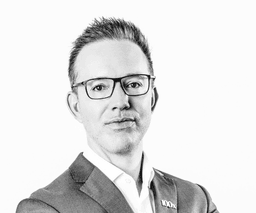
In writing our Annual Investor Letter this year, it was quite remarkable to reflect on the numerous challenges that the global and local markets had to deal with in 2022. It highlighted just how important it is to have hedge fund exposure in your investment portfolio in order to deliver consistent market-beating returns that protect your capital and help manage risk in downturn markets.
As a hedge fund manager, you always want to have some hedges in place as you cannot perfectly predict what a year’s outcome is going to be upfront. Our process and investment philosophy delivered as we had planned in 2022, leading to capital growth and outperformance in a very difficult economic and market environment. Both of our flagship funds were up double digits for 2022, with the Peregrine Capital High Growth Fund ending up 11.5% and the Peregrine Capital Pure Hedge Fund ending up 12.9% (net of all fees and expenses). Our correlation with global and local markets also remains low, proving that our funds are a great diversifier and acted as an effective shock absorber during some difficult months for the overall market during the past year. With the benefit of hindsight, there were some key insights and learnings in our funds from 2022 that we can take into 2023.
Fund insights Thungela Resources was a standout performer for our funds in 2021 and 2022. We acquired the shares at extremely attractive levels following the unbundling by Anglo American and predictable selling by the new shareholder base. The coal market ended up playing out more favourably than we had initially forecast due to the impact of ESG on coal supply, and more significantly, the Russian/Ukrainian conflict.
On reflection, this standout investment confirmed our investment philosophy to: Be willing to sell even your favourite positions when they reach fair value: We greatly appreciate the company, its management team, and the value they have brought to our investors over the past 18 months. However, as is our philosophy, we always prioritize doing what is right for our funds and investors, even when it means letting go of a stock that has done incredibly well for us. We have learned this lesson through experience: it is essential not to get too attached to a particular stock and to be ready to sell when it reaches or exceeds our fair value estimates. Therefore, we sold all our Thungela shares at favourable prices in the second half of 2022.
Consistently update your investment thesis for new information: It would have been easy to sell our Thungela position after it had appreciated by 100% or 200% from our initial entry. But as coal prices went higher due to the Russian invasion of Ukraine, we updated our fair value consistently and realized that we should buy more rather than sell.
Be willing to work harder than anyone else: For Thungela, we did very detailed work upfront when we made the initial investment, but then continued to work extremely hard to gain a thorough understanding of the global coal market, the transport issues at Transnet, and all the other variables impacting Thungela. At the price we acquired Thungela shares post the unbundling, most of the share price was under-pinned by cash. It provided us with a one-sided option on the coal price moving higher.
We will continue to keep an eye on Thungela, but our focus is now on finding the next Thungela, identifying opportunities that may be overlooked by others and capitalizing on them while they are still out of favour.
Fund lessons One thing that is always guaranteed in our industry is that you will make some mistakes, and with those, you will have the opportunity to learn and improve. Here is some context on last year’s learnings for us. Our most significant mistake was holding onto a long position in Meta (previously called Facebook). The position had been a solid performer for the funds from 2017 to 2021. During 2022, the share price was impacted by the slowing global economy and the resultant slowdown in marketing spend by companies and the general de-rating technology businesses experienced due to higher interest rates.
However, a major part of the Meta decline was caused by two company-specific variables: 1.Changes Apple made to the iPhone ecosystem reduced Meta’s ability to accurately target their ads and measure click through rates 2. Competition from Tik-Tok
Meta ended 2022 down more than 60%. In hindsight, there are two major lessons here: Be more aggressive on selling when a share you own approaches its fair value: We should have sold more Meta / Facebook when it performed so well during 2020 and 2021.
React ruthlessly and aggressively when the investment thesis changes. We pride ourselves in reacting quickly when the news flow changes. In this case, the share price moved down very rapidly post the bad news, making it harder to assess if the bad news was now priced in. It has reaffirmed our long-held principle: When there is a material change to an investment thesis, one should sell some or all of the position regardless of whether the share price is already down from the peak.
Getting some calls wrong unfortunately comes with the territory of managing money. Analysing our mistakes and learning the right lessons from them is a key part of what has differentiated us over the last 25 years and we plan to continue to do this.
Looking forward As we start the year, our funds are more conservatively positioned than usual, due to storm clouds on the horizon, both globally and in South Africa. There are meaningful lags between actions like interest rate hikes and the impact on the real economy. Although it looks like inflation has peaked, the global economy has yet to feel the full impact of the substantial rate hikes seen over the past 9 months. The key things to watch in 2023 will be when the aggressive rate hiking cycle starts to impact the economy, how severe that impact will be, and whether we can get through this without a potentially painful recession.
There has been a one in 50-year event in bond markets, with both short and long rates increasing substantially. This immediately impacts liquidity in markets, but the medium-term impact on the overall economy takes time to play out and is harder to predict. The best we can do is to be mindful of the current “temperature” of the global economy and financial markets but take into consideration that global markets have already declined by 20%.
Although some of the risks and uncertainties are most certainly already reflected in valuations, the extent to which these are fully priced in remains to be seen as we navigate our way through 2023.
Our strategy at present is to actively look for unique opportunities with exceptional pay-off profiles, while at the same time carefully managing the risk we take in our overall funds. We want to protect capital if the recessionary scenario plays out, while continuing to generate strong returns even if things muddle along. We expect that the continued volatility and uncertainty in markets will be a great environment for us to continue deploying capital and take advantage of periods of fear and panic when other investors act irrationally.
In the News
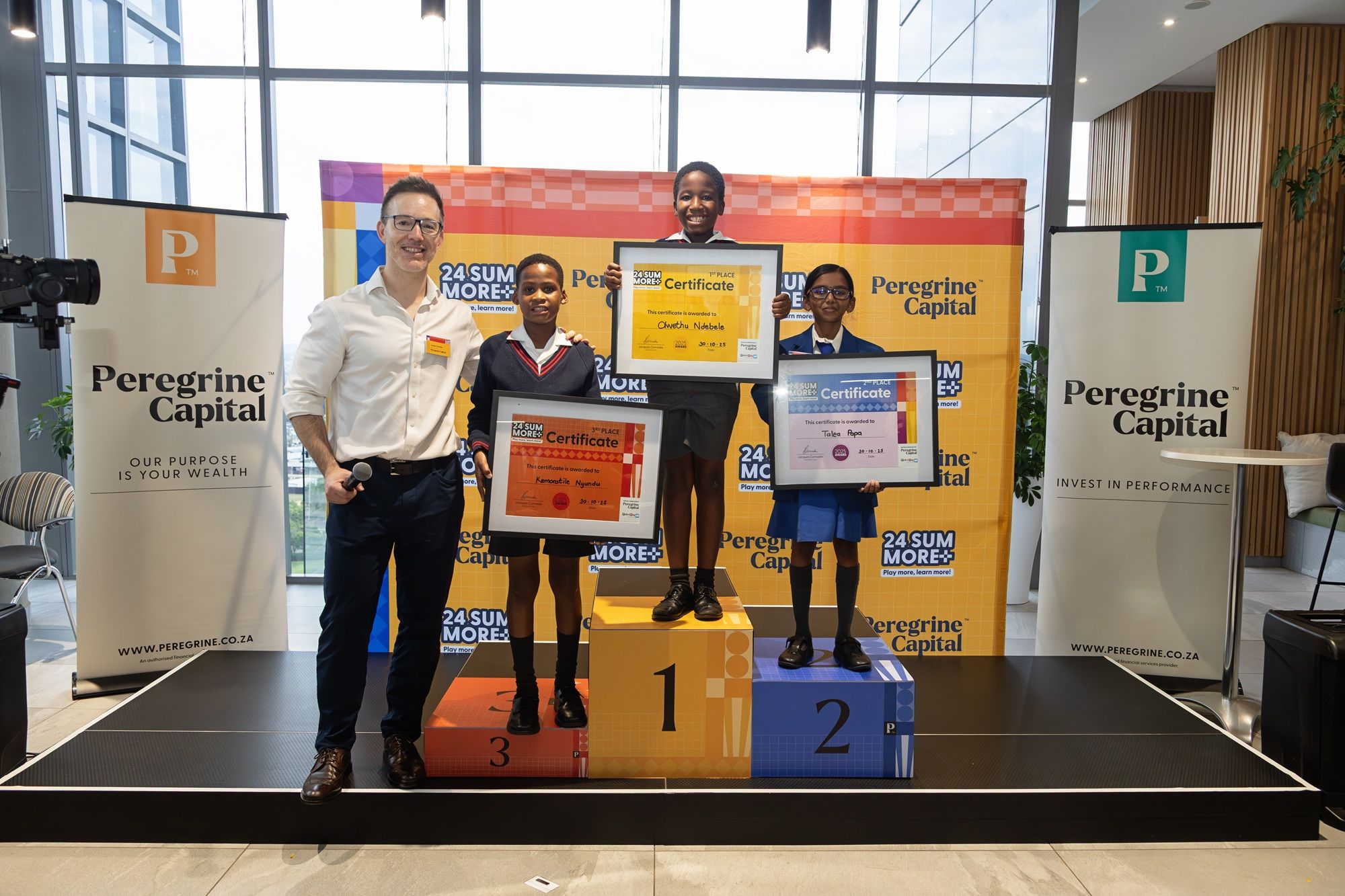
South Africa’s Young Maths Champions Prepare to Make 24 as Peregrine Capital 24SumMore National Final Looms
Can you make 24? Grade 4 – 6 maths champions from 300+ schools compete in the Peregrine Capital 24SumMore national final in Johannesburg on 29 October 2026.
- article
- 3 min read
- 29 September 2026

In the News
The Many Hats a Financial Advisor Wears
Ask most people what a financial advisor does and you get some version of the same answer: they pick investments. That is the visible part of the job, in the way that a prescription is the visible part of what a doctor does. The value sits in everything that happens before it. Writing for Moneyweb, Anne Holding, an investment specialist at Peregrine Capital, sets out the roles a good advisor takes on across an investor's life. Specialist, demystifier, coach, therapist, architect. She also explains why much of that work leaves nothing to point to, because its purpose was prevention.
- article
- 3 min read
- 15 September 2026

In the News
Leading Beyond the Numbers
"Technical competence is the entry ticket, not the differentiator." That line, from Tania Formilan, CFO and COO at Peregrine Capital, is a fair test for anyone building a career in this industry. At a senior level, everyone can do the numbers. What separates people is lateral thinking, judgement, integrity, and the ability to build genuine trust with clients and colleagues. Tania qualified as a CA(SA) in 2000 and joined Peregrine more than 25 years ago, moving from a finance role into operational leadership as the business grew. In that time she has watched South African hedge funds shift from a largely unregulated corner of the market, viewed with scepticism by the broader investment community, to a regulated part of the collective investment landscape, held to the same standards of governance, transparency and risk management as any other asset manager. On what matters most: never lose sight of the fact that people, not processes, get things done. Companies succeed when their people do. Her full interview appears in the Women in Hedge Funds II special report, published by HedgeNews Africa. Our thanks to HedgeNews Africa and Tania Formilan.
- article
- 3 min read
- 26 August 2026
Stay connected
Subscribe to Peregrine Capital's regular communications. Gain access to up-to-date news and insights from our world of Hedge Funds, delivered straight to your inbox.
Stay informed. Stay Educated.