



David Fraser and Jacques Conradie were interviewed by Gwyneth Roberts for the Q1 2023 issue of HedgeNews Africa. They discussed their views on the current market conditions, gave an overview of our fund performance and shared how we plan to continue our 25-year performance track record.
- article
- 10 min read
- 30 April 2023
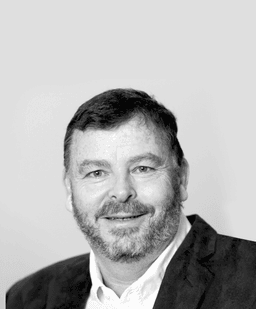
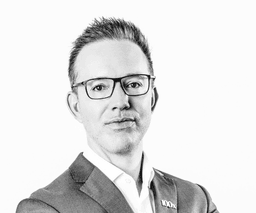
With assets under management of more than R15 billion, Peregrine Capital’s range of hedge funds delivered another solid year’s performance in 2022, despite a tough period for the markets. HedgeNews Africa sits down with David Fraser and Jacques Conradie to discuss the market outlook and how their funds are positioned to keep building on their 20-plus year track record of managing the oldest hedge fund in South Africa.
“This is a market where you want to be liquid and flexible with the ability to change your net exposure as views change,” notes Peregrine Capital’s chief executive Jacques Conradie, after a hard year for the markets in which key global indices were firmly in the red. “We are bullish on hedge funds in all markets. We are looking for consistent returns across cycles and periods. We want consistency without the drawdowns,” adds executive chairman David Fraser. “Given the number of global risks around currently, this is a time for hedge funds to shine,” Fraser adds. “People are worried about a number of significant risks currently so the focus should be asset protection as well as capturing any growth in markets that may be around.” Despite the volatility in both local and international markets, Peregrine Capital’s flagship hedge funds delivered double-digit positive returns in 2022 compared with just 3.58% from the FTSE/JSE All Share Index (total return).
In its latest letter to investors, the Peregrine Capital team notes that while they pride themselves on detailed bottom-up fundamental analysis, there are periods when macroeconomic variables cannot be ignored. They note that the combination of Covid-19 lockdowns and hangovers, loose monetary policy in the US and Europe, supplychain disruptions, geopolitical tensions between the US and China, localisation and protectionism, the lack of investment in new energy supply, and the war in Ukraine have sparked the highest levels of inflation that the developed world has witnessed since the 1970s.
With heightened concern and uncertainty around the outlook for global inflation and the impact of rising interest rates, the market continued to experience significant volatility in the final quarter of 2022, with key global indices clawing back some losses towards year-end. The Peregrine Capital High Growth H4 QI Hedge Fund, which launched in February 2000, gained a net 11.53% last year, compared with 0.7% from the SA Multi-Asset High Equity Category and 4.4% from the FTSE/JSE Capped Swix All Share Index. Since inception, the fund has returned a net annualised 23.6% versus 10.3% from the SA Multi-Asset High Equity Category and 12.2% from the FTSE/ JSE Capped Swix All Share Index.
The Peregrine Capital Pure Hedge H4 QI Hedge Fund, which launched in July 1998, gained a net annualised 12.9% in 2022, compared with 3.9% from the SA Multi-Asset Low Equity Category and 7.4% from CPI. Since inception, the fund has returned a net annualised 19.3% versus 9.7% from the SA Multi-Asset Low Equity Category and 5.6% from CPI, and has not had a negative year.
Conradie and Fraser note that their portfolio positioning remains balanced, with net exposure somewhat below longterm averages and moderate gross exposure, as the team continues to actively seek out dislocations in asset prices that offer pair trading opportunities so that they can flex their gross exposure without increasing exposure to market risk. “While there are safe-haven assets in bonds and gold, we are actively looking for investments that are uncorrelated to macro themes,” says Conradie. “We have actively prioritised pair trades as a means of generating alpha in this environment. This conservative portfolio exposure positions us well to take advantage of dislocations in asset prices that inevitably result from the market volatility we’ve been experiencing in the past year.”
At individual company level, the team has deliberately increased exposure to companies that generate significant free cash flow, have strong pricing power and strong balance sheets. “We have identified several companies that we believe will not only be resilient in the face of inflation but are also competitively advantaged to the extent that they would benefit from an inflationary environment.” By sector, they have decreased exposure to SA banks after a strong rally, and also reduced exposure to technology companies in the US and China whilst further reducing commodity exposure after strong price appreciation in the companies they own.
Looking back, the funds benefited in 2021 from overweight positions in global technology and long exposure to growth shares, whereas in 2022 they caught the coal trade and made active use of stop-loss processes, with an absolute-return mindset seeking to outperform the market.
Amidst a complicated global environment that has forced global allocators to focus on their own domestic issues, Fraser notes that South Africa is not much on the radar of foreign investors at present. Conversely the team has swung its focus back to South Africa, finding good opportunities locally which they know and understand better than most, given their deep research base. “In a more volatile environment I have all my money in the high growth fund,” adds Conradie. “The fund has the flexibility to scale up or down and run more cash when conditions are difficult.”
“The South African market and the economy is not necessarily in a growth phase but we are using pair trades, shorting and buybacks to good effect – allowing us to pick up alpha despite the fact that there are significant risks out there.”
For example, in the insurance sector the team has been long South African financial services group Momentum, which it believes has been way too cheap, versus short positions in other insurers. They have also identified profitable pair trades in the property sector, looking for undervalued opportunities or those with specific catalysts to unlock value. They played the retail sector reasonably well during the pandemic, shorting expensive stocks or those with specific underlying issues. “There are significant risks out there and we are concerned about being long the market. We are about 60% net long, investing in stock-specific opportunities and pair trades that allow you to pick up alpha,” says Conradie. Exposure to financials, real estate, industrials and insurance were the key contributors to performance during the past quarter, whilst technology companies and some portfolio hedges were detractors, given broad-based strength among equity markets towards year-end.
“It’s a great time for hedge funds, we see opportunities where we can be significantly long. Given significant macro issues out there we can either pre-hedge for events – for example, the potential for escalation of tensions between China and Taiwan – or act fast when circumstances change,” says Conradie. “At present we have more of a trading mindset than we have had in the last few years.” Another key focus has been to identify companies that can capture inflation. “Value without a catalyst to unlock value remains value,” says Fraser. “There is more to it than crudely identifying value. We look at share buybacks, dividend yields – we need a roadmap to unlock that value. It’s about cash generation and net return to shareholders.”
With an extensive history in the South African market, the nine-strong investment team has meaningful access to corporates and an in-depth research process. The team includes Fraser and Conradie as portfolio managers, as well as executive director and PM Justin Cousins, and Simon Steyn and Matthew Thomson, who moved into PM roles last year. Nathi Msimango is a trader and investment analyst, Anton Smit and AJ Snyman are analysts and Jamie White is a trader. With a total staff count of 38, Peregrine Capital has also built out its operations, marketing, distribution and technology efforts in recent years.
While South Africa in general is still attractively priced, the team has taken profit in some sectors, such as banks and financials where their exposure has halved. “We do see value overseas but the standout value sits in South Africa at the moment,” says Fraser. “We continue to see better value in South African equities than those located outside of our borders. Several mid-cap companies are offering very attractive valuations and a lot of shares are not fully recognising fair value.” Given the state of global flux, the team has been diligent in their research processes. “In a market like this, you look at new ideas,” says Conradie. “For example, with South African government bonds offering a 10-year yield above 11%, we have added exposure.”
By sector, the team has slightly less exposure to technology shares compared with a year ago, underpinned by the fact that higher rates globally are likely to have a negative impact. They have focused on building exposure to a subset of companies that can help capture inflation. “For example, [global payments processor] Mastercard is an effective 0.1% tax on global GDP, captured daily. It is a great way to capture inflation.” Similarly, Bidcorp, the JSE-listed international broad-line foodservice group, also stands to capture global inflation, with restaurants back at capacity post-Covid while food prices are high. “It is a test to our analysts to find companies that are relevant to this market,” says Fraser. “We are finding businesses that can capture high inflation, which will flow through to earnings.” They note that the market is currently “badly balanced”, with some companies facing margin squeezes from which they may not recover while others have significant overcapacity in a competitive environment.
“Not all companies are impacted in the same way,” says Conradie. “Our analysts are looking for companies that can cover any input costs and maintain margins at attractive long-term valuations.” Besides inflation, Fraser notes that South African companies are also being adversely affected by the non-delivery of services, with extensive electricity load-shedding challenging business models, as well as concerns about water supply and logistics. South Africa experienced its worst spell of loadshedding on record during the fourth quarter and the current state of Eskom and many other state-owned entities is a cause for serious concern. “Companies in South Africa are facing extra challenges, not just high commodity prices.
For example, chicken producer Astral Foods is having to spend R80 million on generators,” says Fraser. “We need to work with management teams that have the ability to adapt to ever-changing circumstances.” “Inflation remains a central issue; it feeds into interest rates and then into the economy,” adds Conradie. “We also keep a close eye on geopolitical tail risks (such as Russia/Ukraine), which have the potential to massively swing the markets, as well as the recession implications for 2023. We spend many hours working out the first and secondary implications and we work that back into what it means for the economy, for individual companies. It is a good exercise – last year, we looked at implications for food prices from increased commodities costs and we think we understood that sooner than most. You need to position the funds to effectively protect and in some cases benefit, from what is happening.
“It is tricky to play short-term moves,” he adds. “We have a lot of cash now. Capital preservation is first and foremost for us. It’s about being prudent. We don’t want massive losers, we want to avoid the drawdowns.” “We are also diligent about cutting our positions when we reach fair value,” adds Fraser. “If we buy something, it’s for a specific reason. Sometimes stocks appreciate significantly and we need to lean against the wind and cut our positions.” In a market that looks set to fluctuate in various bands, they have difficulty in seeing a reason to be outright bullish. “This is not a time to add equity,” adds Fraser. “We have enough irons in the fire to be reasonably confident about the next few years. We don’t need more equity content unless we see a significant increase in earnings and fair value.”
The team remains committed to finding unique investment opportunities where it has an edge, and which can deliver strong uncorrelated returns. It continues to perform detailed, bottom-up, fundamental research, and deploy capital rationally where market prices deviate materially from fundamental value. “We remain confident that over the medium term the price that we pay, and the earnings growth delivered by the companies we own, will deliver strong returns for investors. Despite the volatile and uncertain environment, we remain optimistic and excited about the prospects for the funds for the year ahead.”
Besides its two flagship QIFs, Peregrine Capital also offers retail versions of the strategies which are available on all major LISPs. The Peregrine Capital High Growth H4 Retail Hedge Fund and the Peregrine Capital Pure Hedge H4 Retail Hedge Fund each have a three-year track record, mirroring the flagship funds. “One of the industry’s big success stories of late has been attracting retail investors and the increased take-up and understanding we have seen from IFAs,” says Fraser. “Until recently, the South African hedge fund industry has experienced the downside of regulation without the promised upside. But there is no doubt we are starting to see more mainstream awareness and understanding. We are heartened to see hedge funds getting traction.” Peregrine Capital keeps a close eye on capacity and has at times in its history closed to new investors. With the funds now including some offshore exposure, it does not anticipate capacity constraints for at least the next 12-24 months.
“This year we celebrate our 25th anniversary, a major milestone,” notes Fraser. “The growth and performance of the business has been fantastic and we believe our funds are appropriately positioned and in a good space. We are excited about the opportunities.” “The core issue for us is always performance. At end of the day, that anchors our business When we wake up every day, we have to justify our existence. It’s a huge responsibility for us and our peers. The South African industry has proved itself and should grow significantly higher off this base. This is a great asset class and should be higher on the agenda of more investors. I continue to believe that the best investment talent in the country is in the hedge fund industry.
In the News
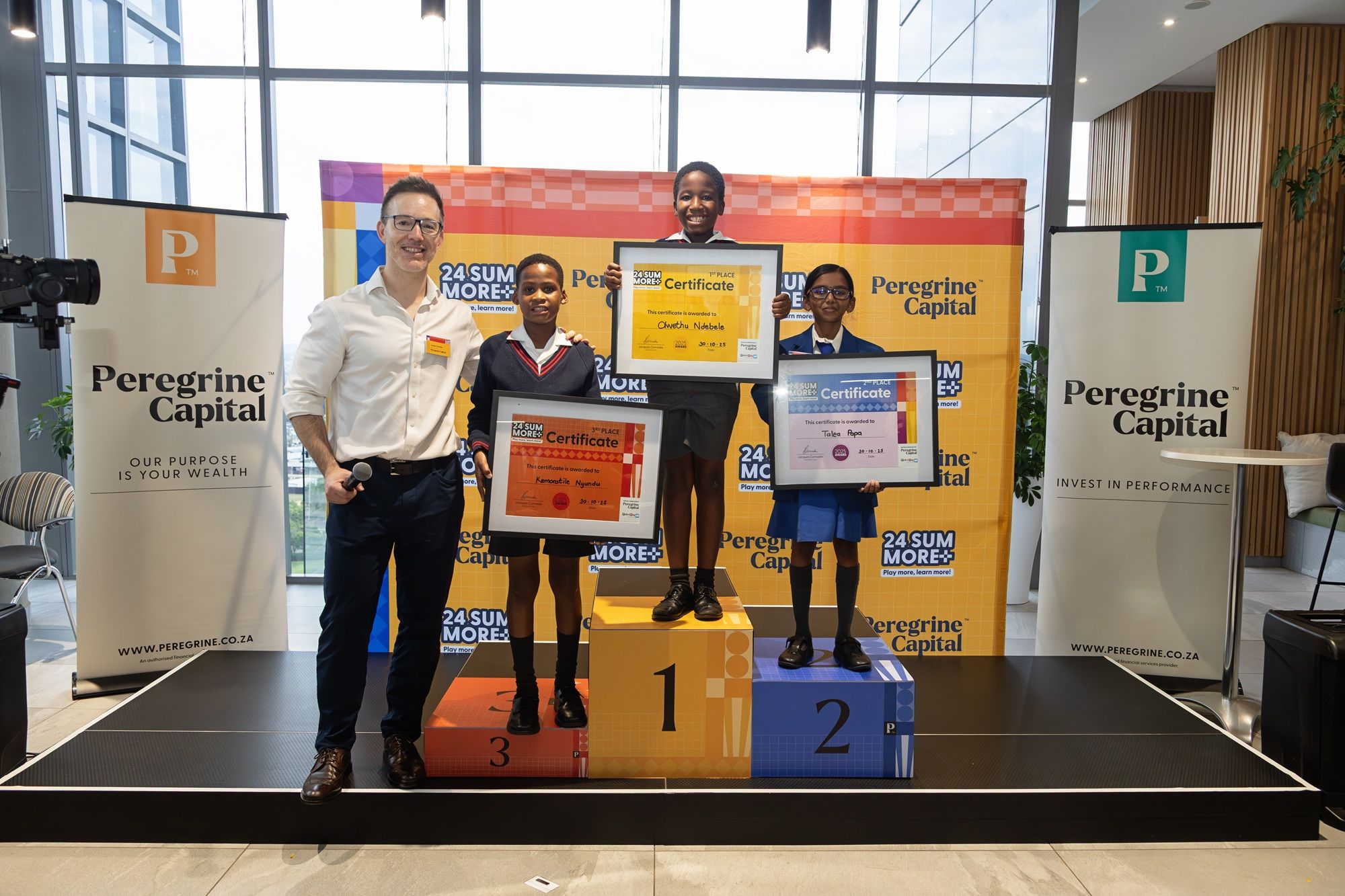
South Africa’s Young Maths Champions Prepare to Make 24 as Peregrine Capital 24SumMore National Final Looms
Can you make 24? Grade 4 – 6 maths champions from 300+ schools compete in the Peregrine Capital 24SumMore national final in Johannesburg on 29 October 2026.
- article
- 3 min read
- 29 September 2026

In the News
The Many Hats a Financial Advisor Wears
Ask most people what a financial advisor does and you get some version of the same answer: they pick investments. That is the visible part of the job, in the way that a prescription is the visible part of what a doctor does. The value sits in everything that happens before it. Writing for Moneyweb, Anne Holding, an investment specialist at Peregrine Capital, sets out the roles a good advisor takes on across an investor's life. Specialist, demystifier, coach, therapist, architect. She also explains why much of that work leaves nothing to point to, because its purpose was prevention.
- article
- 3 min read
- 15 September 2026

In the News
Leading Beyond the Numbers
"Technical competence is the entry ticket, not the differentiator." That line, from Tania Formilan, CFO and COO at Peregrine Capital, is a fair test for anyone building a career in this industry. At a senior level, everyone can do the numbers. What separates people is lateral thinking, judgement, integrity, and the ability to build genuine trust with clients and colleagues. Tania qualified as a CA(SA) in 2000 and joined Peregrine more than 25 years ago, moving from a finance role into operational leadership as the business grew. In that time she has watched South African hedge funds shift from a largely unregulated corner of the market, viewed with scepticism by the broader investment community, to a regulated part of the collective investment landscape, held to the same standards of governance, transparency and risk management as any other asset manager. On what matters most: never lose sight of the fact that people, not processes, get things done. Companies succeed when their people do. Her full interview appears in the Women in Hedge Funds II special report, published by HedgeNews Africa. Our thanks to HedgeNews Africa and Tania Formilan.
- article
- 3 min read
- 26 August 2026
Stay connected
Subscribe to Peregrine Capital's regular communications. Gain access to up-to-date news and insights from our world of Hedge Funds, delivered straight to your inbox.
Stay informed. Stay Educated.