



The top 1% of South African financial advisors are not better qualified than their peers. They do not have access to better products or better markets. In most cases, their professional training is identical. What separates them, after a decade of conversations with thousands of advisors, is simpler than most expect: they never stop asking why.
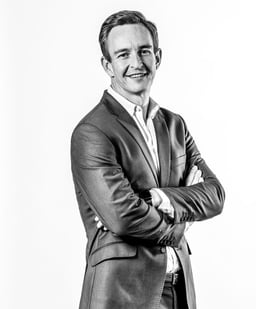
In his latest piece published on Moneyweb today, Alan Yates, our Head of Distribution, draws a direct line between the intellectual curiosity of the world's great investors, Buffett, Munger, Paul Tudor Jones, and the advisors whose clients are best served over time.
- article
- 3 min read
- 23 June 2026
There is one binding hallmark of every great investor I can think of – Charlie Munger, Warren Buffett, Paul Tudor Jones, Howard Marks, the list goes on.
It is not raw intellect (although they all have it), it is not superior pattern recognition, and it is not a common drive for riches. It is intellectual curiosity – a refusal to conclude that they know enough.
Munger put it plainly in his 2007 commencement address at the University of Southern California: “I constantly see people rise in life who were not the smartest, sometimes not even the most diligent, but they are learning machines. They go to bed every night a little wiser than they were when they got up.”
Jones, asked once what separates traders who endure from the rest, replied, “An indefatigable and unquenchable thirst for information and knowledge.”
Both men had totally different styles of investing and ways of generating returns, but they shared a common trait that made them successful.
The same trait of curiosity, and I have come to believe, is what separates the very best South African financial advisors from everyone else.
What separates the great from the good
I have spent the better part of a decade sitting across the table from thousands of different financial advisors.
Couple that with the fact that one of the most frequent requests I get from my wider social circles is a recommendation for a great financial advisor, and it was inevitable that I became interested in what separates the great from the good.
On balance, most of them have very similar environments – they share the same market, the same regulatory environment, can broadly access the same product universe, and, for the most part, have similar professional training.
And yet the variance in outcomes – for the advisors themselves and, more importantly, for their clients – is enormous.
After enough conversations, a pattern certainly emerges.
The very best advisors are quickly recognisable, and what makes them great, in my mind, is that they share the same trait as Buffett, Munger, and Marks. They never stop asking why.
The advisor who dismisses a new product, asset class or regulatory change out of hand – on the strength of a headline, a stereotype, or a half-remembered impression – is, in my experience, almost never the advisor whose clients are best served over time.
The advisor who is willing to engage with new things, do the work to understand it, and only then form a view, is.
I engage with advisors about hedge funds. For most advisors, this is new territory. Many had grown up in an industry dominated by fixed-income and equities. Hedge funds are often a new frontier that requires work to understand.
Some dismissed this new category out of hand, reflexively closing off an entire toolkit before they had any basis for evaluating it.
The intellectually curious were willing to do the work before making a decision. They read. They enquired. They asked the difficult questions. They understood the mandates, the fee mechanics, the liquidity terms and the risk frame.
Most of them, having done that work, concluded that regulated hedge funds had a meaningful role to play in their clients’ portfolios – perhaps not for every client, and not in every allocation, but often enough to matter.
A smaller number reached the opposite view, and that was an equally valid outcome, because it was informed.
What separated the top advisors was never the conclusion they reached. It was their willingness to reach it through work rather than assumption.
That habit, doing the work to choose, rather than choosing to avoid the work, runs through everything else that distinguishes them. It is the same habit I see when a new tax regime is introduced, a new offshore allowance is granted, or a new product structure enters the market.
The best advisors are not always the first to adopt, but they are always among the first to do the work to understand.
Client-first approach
And one can see that level of curiosity in every level of their business. The first hour with a new client tells you almost everything you need to know about an advisor’s approach. Many spend that hour explaining what they do.
The better choice is to ask what the client has lived through with money. They treat that first meeting as an opportunity for discovery, rather than an opportunity to close a sale. They spend the time learning and listening, rather than explaining.
It’s that mindset that creates the greatest competitive advantage in a very, very competitive market.
The best advisors I have observed are not just trying to beat the market. They are trying to develop a genuine understanding of the person so that they can help them achieve what is meaningful to them.
They are trying to protect their clients from the version of themselves that wants to react when markets induce fear.
The best advisors treat their clients as the assets they are managing. Returns are downstream of behaviour. They focus their attention where the leverage is.
This shows up over years, not meetings.
The best advisors compound their practices the same way good portfolios compound – long client tenure, low churn, referrals arriving unprompted and the second generation of a family appearing because the first generation has absolute trust in them.
The practice itself behaves like a well-run portfolio: long duration, low turnover, growing intrinsic value.
None of this requires a new qualification, product, or platform. What they share is a single underlying habit: the willingness to keep learning, to keep doing the work, to keep asking why.
The most valuable asset
The South African advice profession is full of good people doing serious work. The top 1% are not better qualified or better funded. They are simply more curious. They have decided, like the greats, that the most valuable asset they have is a refusal to conclude that they ever know enough.
The best advisors understand that the stakes of their work are not measured in basis points. They are measured in whether someone gets to live the life they planned for themselves. Curiosity isn’t just a professional edge – it’s what clients deserve.
Read article on Moneyweb here

In the News
South Africa’s Young Maths Champions Prepare to Make 24 as Peregrine Capital 24SumMore National Final Looms
Can you make 24? Grade 4 – 6 maths champions from 300+ schools compete in the Peregrine Capital 24SumMore national final in Johannesburg on 29 October 2026.
- article
- 3 min read
- 29 September 2026

In the News
The Many Hats a Financial Advisor Wears
Ask most people what a financial advisor does and you get some version of the same answer: they pick investments. That is the visible part of the job, in the way that a prescription is the visible part of what a doctor does. The value sits in everything that happens before it. Writing for Moneyweb, Anne Holding, an investment specialist at Peregrine Capital, sets out the roles a good advisor takes on across an investor's life. Specialist, demystifier, coach, therapist, architect. She also explains why much of that work leaves nothing to point to, because its purpose was prevention.
- article
- 3 min read
- 15 September 2026

In the News
Leading Beyond the Numbers
"Technical competence is the entry ticket, not the differentiator." That line, from Tania Formilan, CFO and COO at Peregrine Capital, is a fair test for anyone building a career in this industry. At a senior level, everyone can do the numbers. What separates people is lateral thinking, judgement, integrity, and the ability to build genuine trust with clients and colleagues. Tania qualified as a CA(SA) in 2000 and joined Peregrine more than 25 years ago, moving from a finance role into operational leadership as the business grew. In that time she has watched South African hedge funds shift from a largely unregulated corner of the market, viewed with scepticism by the broader investment community, to a regulated part of the collective investment landscape, held to the same standards of governance, transparency and risk management as any other asset manager. On what matters most: never lose sight of the fact that people, not processes, get things done. Companies succeed when their people do. Her full interview appears in the Women in Hedge Funds II special report, published by HedgeNews Africa. Our thanks to HedgeNews Africa and Tania Formilan.
- article
- 3 min read
- 26 August 2026
Stay connected
Subscribe to Peregrine Capital's regular communications. Gain access to up-to-date news and insights from our world of Hedge Funds, delivered straight to your inbox.
Stay informed. Stay Educated.